Beni Suef University
faculty of Pharmacy
Department of Biochemistry
faculty of Pharmacy
Department of Biochemistry

جامعة بني سويف
كلية الصيدله
قسم الكيمياء الحيويه
كلية الصيدله
قسم الكيمياء الحيويه
Introduction
DNA (deoxyribonucleic acid) and RNA (ribonucleic acid) are two
essential types of nucleic acids that play critical roles in the
storage and transmission of genetic information. This poster aims
to provide a detailed overview of DNA and RNA, covering their
structure, function, and significance in various biological
processes.
Objective
To provide a comprehensive understanding of the structure,
function, and significance of DNA and RNA in storing,
transmitting, and expressing genetic information.
RNA
This section will also highlight the structure of RNA, which is
typically single-stranded and differs from DNA in several key
ways. It will explain the components of RNA, including
nucleotides that are made up of a sugar molecule (ribose), a
phosphate group, and a nitrogenous base (adenine, uracil,
cytosine, or guanine). It will emphasize the presence of uracil
(U) in RNA instead of thymine (T) found in DNA, and how this
difference affects the base pairing during RNA synthesis and
function.
DNA
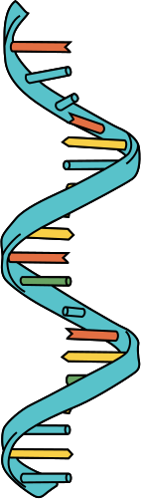
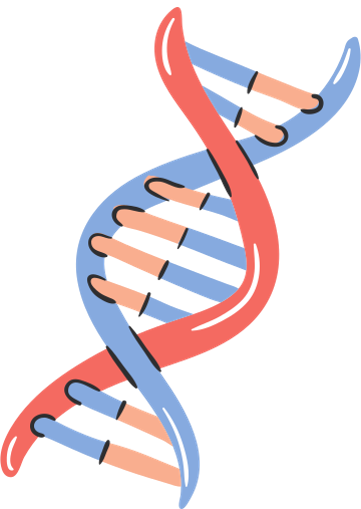
This section will highlight the structure of DNA, which consists
of two complementary strands arranged in a double helix. It will
explain the components of DNA, including nucleotides that are
made up of a sugar molecule (deoxyribose), a phosphate group,
and a nitrogenous base (adenine, thymine, cytosine, or guanine).
It will also illustrate the complementary base pairing between
nucleotide bases, where adenine (A) pairs with thymine (T) via
two hydrogen bonds, and cytosine (C) pairs with guanine (G) via
three hydrogen bonds.

Function of DNA and RNA:
This section will explain the fundamental functions of DNA and RNA
in cells. It will highlight how DNA serves as the genetic material
that carries the hereditary information required for the
development, growth, and functioning of all living organisms. It
will explain the process of DNA replication, where DNA is
duplicated during cell division, ensuring that the genetic
information is passed on accurately to the next generation. It
will also describe the process of transcription, where RNA is
synthesized from DNA, and translation, where RNA is used as a
template to synthesize proteins, which are essential for the
structure and function of cells

Significance
This section will emphasize the significance of DNA and RNA in
various biological processes. It will explain how DNA serves as
the basis for inheritance, allowing the transfer of genetic traits
from one generation to another. It will also highlight the role of
DNA and RNA in genetic disorders and diseases, as mutations or
alterations in DNA or RNA can result in genetic abnormalities. It
will also highlight the importance of RNA in regulating gene
expression, splicing, and other cellular processes, making it a
crucial molecule in the regulation of biological functions.
Conclusion
In conclusion, DNA and RNA are remarkable molecules that are
essential for the storage, transmission, and expression of genetic
information. This poster provides a comprehensive overview of the
structure, function, and significance of DNA and RNA, shedding
light on their fundamental roles in various biological processes.
Understanding the intricacies of DNA and RNA is crucial for
advancing our knowledge in genetics, molecular biology, and
related fields, and has wide-ranging implications in medicine,
biotechnology, and genetic engineering.